A Legacy of Excellence
The History of Chittaranjan High School (EM)
The Foundation
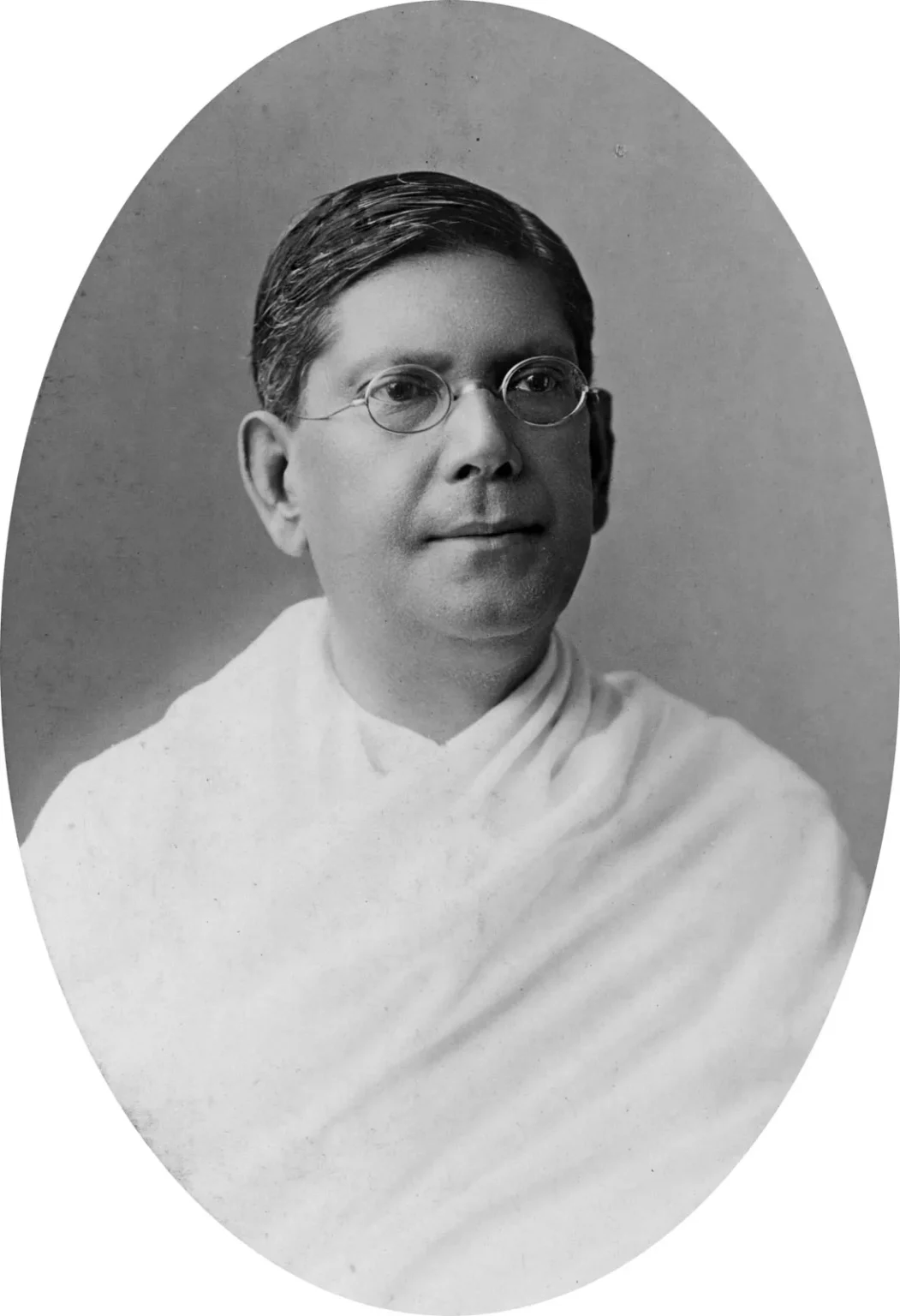
Chittaranjan being a cosmopolitan township having population of widely diverse composition with heterogeneous ethnicities from all parts of India owing to personnel serving Chittaranjan Locomotive Work (CLW) the need for an affordable government English medium school had long been felt strongly. CLW Administration took the required initiative under the visionary leadership and missionary zeal of the then General Manager (GM), Shri R Krishnaswamy. The educational institution of Chittaranjan High School (English Medium)/ CHS(EM) was established under the aegis of CLW, Ministry of Railways, Government of India, named after Deshbandhu Chittaranjan Das, the Foundation Day of the School Being 02nd January 1967, Monday.
Location of the School was selected based on available space and accessibility from all areas of the township. Initially, two separate wings, one each for Boys and Girls were planned. The two storey School building had been constructed accordingly.
At that point of time, the concept of class-XII was not in vogue. Higher Secondary examination was conducted in class- XI Each of the boys’ wing and girls” wing was envisaged at the planning phase to cover from class- I to class -XI independently. However, the Boys’ wing took off with its range from class – I to class – VIII and the Girls’ wing was launched with its span from class-I to class-VI.
With regard to the Girls’ wing, it was planned to open the classes VII & VIII gradually, whereby the girls students were due to be promoted to the levels of classes VII & VIII progressively after passing out from class – VI. Further the plan was to open the classes IX, X &XI subsequently and promote the girl students passing out of class VIII progressively to classes IX, X & XI in their separate wing itself and at the end of successive annual examinations of earlier classes, so as to prepare them ultimately for Higher Secondary examination at the end of class XI.
With regard to the Boys’ wing, it was planned to open the classes IX,X & XI gradually, whereby the boy students passing out from class- VIII were due to be promoted to the classes IX,X & XI progressively in their separate wing itself at the end of successive annual examinations of earlier classes, so as to prepare them ultimately for Higher Secondary examination at the end of class-XI from class I to class VIII, and co-education of Boys & Girls was introduced in classes IX, X & XI. This arrangement continued till 1976 and all classes were used to be held in day session.
"Segregation of Arts/Humanities, Science and Commerce streams came into force at Higher Secondary level."
1971 – 1977
The First Batch & Major Transitions
The first batch of CHS(EM) students appeared at the centrally conduced Higher Secondary examination in March- April 1971 at the end of the class XI. Rigid segregation of subject streams at the level of Arts/Humanities, Science and Commerce hadn’t yet come into effect.
Major changes happened in 1977. Class XII was introduced to Higher Secondary curriculum in this year. Simultaneously Primary section for both girls and boys covering class-I to class-V separately was segregated from the day session to be held henceforth in morning session in order to tide over space constraint. The secondary section consisting of classes VI-X mentoring its students for Madhyamik Pariksha at the end of class-X and Higher Secondary section consisting of classes XI-XII mentoring its students for Higher Secondary Examination at the end of class XII remained in the day session. Segregation of Arts/Humanities, Science and Commerce streams came into force at Higher Secondary level.
Principal used to look after the complete School as its Head right since its inception. For the Primary section in morning session Teacher -in -Charge was appointed under Principal initially.
1977 & Beyond: The Shifting Eras
Further major changes occurred in the school from 1977 onwards, which altered characteristics of the Institution substantially.
Besides English medium, a Bengali medium section was introduced at the Secondary level of CHS(EM) for classes VI-X, primarily to accommodate the surplus students of Deshbandhu Vidyalaya (Boys’)/ D.V. Boys’ school .This section was meant for only Boys.
In the original English Medium section Boys & Girls continued to study separately from class-VI to class-VIII and together in Co-education in classes IX and X.
Higher Secondary classes were discontinued at Deshbandhu Vidyalaya (Boys’)/ D.V. Boys’school & Deshbandhu Vidyalaya (Girls)/ D.V. Girls’ school and all the students passing Madhyamik Pariksha from these two schools were admitted to CHS/EM in various language streams for their HS studies.
In the new -configuration Higher secondary wing of CHS(EM) comprising classes XI & XII, pedagogy was taken up in three different subject streams-Arts/Humanities, Science & Commerce, and three different mediums of instruction-English, Bengali & Hindi.
In this overhauled Higher Secondary curriculum, Arts/Humanities lessons were imparted in only one language of Bengali in co-educational mode. Science lessons were imparted in two languages of English and Bengali in co-educational mode. Commerce lessons were imparted in only one language of Hindi for only Boys. However, boy students preferring other languages to Hindi could also gain admission in Commerce stream, but they were required to write examination answers in English.
Conversely speaking, in the English Medium of the overhauled Higher Secondary curriculum only Science subjects were taught in co-educational mode. In the Bengali medium, Arts/Humanities and science subject were taught in co-educational mode. In the Hindi medium, only Commerce subjects were taught for Boys only.
Under this system, a good number of senior Teachers from D.V. Boys’ & D.V. Girls’ were transferred to CHS(EM), resulting in a flutter due to the generation gap between the younger Teachers of original CHS(EM) and the older Teachers migrating from other schools.
The state of major flux continued at CHS(EM) from 1977 till the latter part of 1980s. Ultimately, the Senior Teachers mostly reverted to their parent schools, primarily D.V. Girls’ along with their students, when Higher Secondary classes were restored there. Hindi Commerce stream stayed back at Higher Secondary level of CHS(EM) for a few more years before it was shifted altogether to the Higher Secondary Hindi medium wing of D.V. Boys’. The Commerce stream at Higher Secondary level in CHS(EM)was subsequently taught in English version. Co- education was terminated at CHS(EM). An English medium section was opened at Higher Secondary level of D.V. Girls’ school in the meantime apart from Bengali & Hindi medium sections, where the Girl students of CHS(EM) Higher Secondary wing were relocated in various language streams. Several years later in 2017 coeducation was reintroduced at HS Level in all the three streams and till date the same has been continuing successfully.
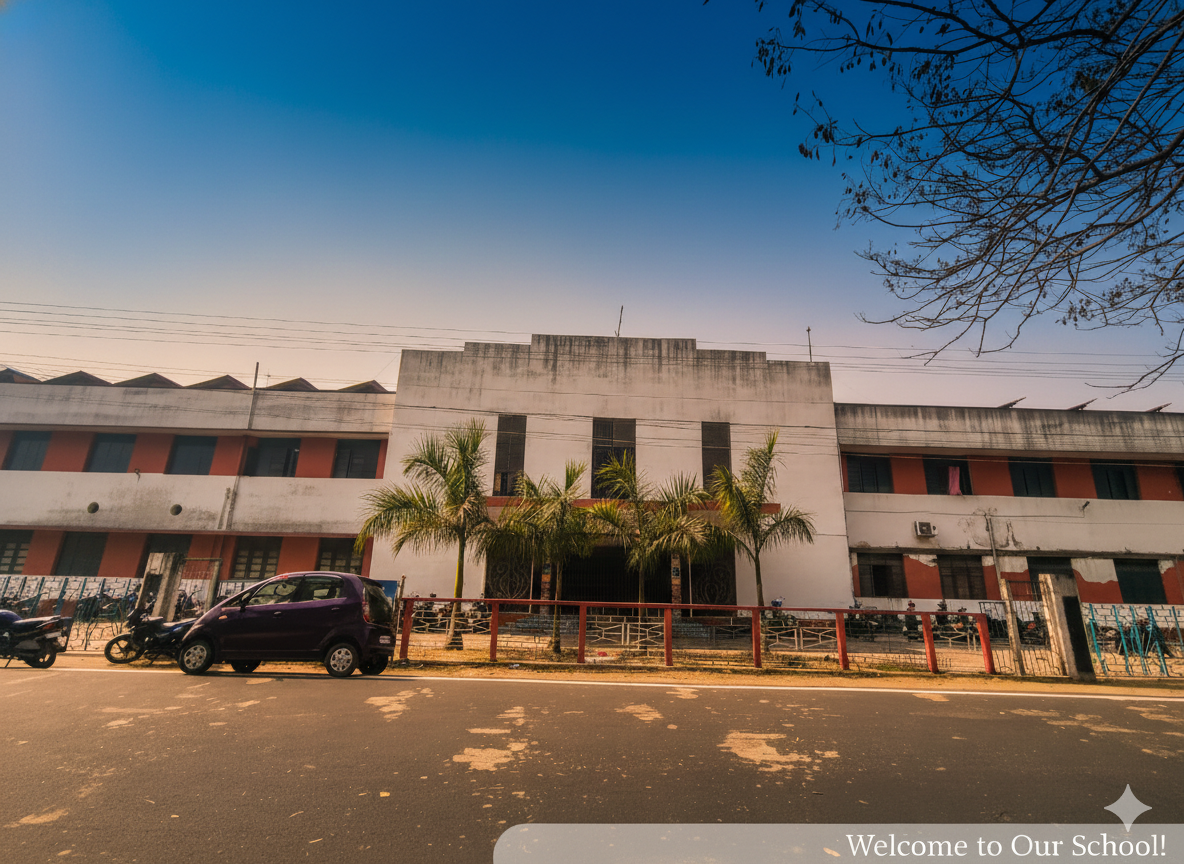
It is amply evident that during 1967- 1990s, CHS(EM) had to withstand a string of frequent upheavals effected by CLW Administration. In spite of the consequent impact on the Institution, the overall high standard of education, Teachers, Students and examination results have never waned. The relationship between Teachers and students has been cordial & synergic over the ages. Alumni of CHS(EM) are well-established in all spheres of life all over India and abroad.